Showing posts with label chacha. Show all posts

Sunday, June 21, 2009

The Dilemma over People Power

The short Twitter exchange between myself and Doc Emer was taken out of context in Ms. Veneracion’s column on Manila Standard. For the past week I have been glued to the revolution unfolding in Iran. And I tweeted that People Power is one Philippine export our people could be proud of, to which Doc Emer replied “No. They're sick and tired of people power.” I tweeted back, “A shame then. How can people be sick and tired of fighting for freedom?”

Ms. Veneracion in her column reiterates the People Power was not a mass-initiated event. No account of EDSA 1 and EDSA 2 would claim otherwise. I certainly don’t. I also agree with her on the narrowness of People Power’s aims:
Third, the 1986 Edsa Revolution, a.k.a. People Power, was a fight for freedom only in a very narrow sense because its proponents were fighting to free themselves primarily, and the country secondarily, from the tyranny of Marcos.
I would not go so far though, to claim that People Power was manufactured to suit these ends:
It was merely about booting out some people and placing others in their stead. It was never about a long-term empowerment of the masses but merely a monitored empowerment that lasted only long enough to install new protagonists in key positions in government.
I understand Ms. Veneracion’s fear of ‘People Power.’ More than two decades later, the promise of EDSA has been frittered away. It is arguable whether we are better off today than Filipinos who lived through the Marcos regime. She is fearful of what might result from another EDSA revolt, fearful most of political opportunists who might take advantage. We need only look at Gloria Macapagal Arroyo to see that the consequence of our action has installed a President who now rivals Marcos in her hunger for absolute power.

This points then to the limits of People Power, what it is and what it is for. I agree with the characterization of Joel Rocamora, when he says it is a symptom of our ‘low intensity democracy.’ Because our institutions are far from democratic, they are open to monopoly by power holders. The current push for constitutional change, which all political observers interpret to be Arroyo’s bid to remain in power, is testament to this susceptibility to monopoly.

While we can debate over the consequences of People Power, that is, the citizens’ recourse to action when our major institutions – the Executive, the Legislative and the Judiciary, are co-opted by non-democratic forces - can we cast doubt over the utility, indeed the reason for being, of People Power itself?

I say no. For as long as our political institutions continue to be hi-jacked by a few, for as long as our government cannot and does not reflect what we citizens deem to be good and just way of governing, then the Filipino ought to have recourse for People Power. It ought to remain a legitimate means to air our grievance especially in times of crisis. When our institutions are open and accessible to the will of all, then we may lay the parliament of the streets to rest.

The question then is not whether Conass will trigger People Power, as Ms. Veneracion asks. The question is why must we resort to People Power at all? Why if we have the trappings of a democratic society, must we resort to unleashing the Power of the Powerless? That is, the act of articulating, whether it be on blogs, on Twitter or out on the streets, that the Empress has no clothes?

Tuesday, June 16, 2009

Be It Resolved To Break The Law

Article 17 Section 1 above clearly grants "Constituent Power" -- the power to propose amendments to, or revisions of the Constitution -- to two different entities: (1) The Congress; and (2) A Constitutional Convention.

Unlike the Congress, which is amply  defined in the Constitution and is a continuing institution,  a ConCon would have to organize itself, elect its officers, adopt its rules of procedure, etc.  

Now read the disposing portion of HR 1109--

“NOW THEREFORE, BE IT RESOLVED, THAT THE MEMBERS OF CONGRESS BE CONVENED FOR THE PURPOSE OF PROPOSING AMENDMENTS TO, OR REVISION OF THE CONSTITUTION UPON A VOTE OF THREE-FOURTHS OF ALL ITS MEMBERS THAT UPON ITS BEING CONVENED SHALL ADOPT ITS RULES OF PROCEDURES THAT SHALL GOVERN ITS PROCEEDINGS.”

Clearly, this mere House Resolution is calling upon  the Members of Congress to CONVENE into what is in effect an UNELECTED CONSTITUTIONAL CONVENTION.

A Constitutional Convention (ConCon), "upon its being convened," would indeed "adopt its rules of procedures that shall govern its proceedings." 

But the 1987 Constitution clearly did not intend for the Members of the Congress to usurp the clear and separate mode of a Constitutional Convention by convening themselves into a separate entity that they are now calling a Constituent Assembly.  The delegates to a ConCon are elected by the people specifically to amend or revise the charter.  Perhaps that is why a three fourths majority rule condition is provided by the Constitution when Congress exercises constituent power.

HR 1109 is superfluous because the Congress already IS a ConAss in the sense that the Congress can already propose any amendment or revision.  

HR 1109 resolves to convene an entirely different and separate entity, called the Constituent Assembly, distinct from the Congress, which will even "adopt is [own] rules of procedure that shall govern its proceedings".  Then certain Members of Congress intend to install themselves in the role ConCon delegates without the benefit of election to that role.

Some people are saying that if and when Nograles and company convene the ConAss, that will ignite  a "justiciable controversy" that will force the Supreme Court to decide the matter.

I don't think it should ignite a justiciable controversy at all. Rather it should ignite arrest and charges of Graft and Corruption, in flagrante delicto, against all participants in such an illegal action to convene what is in effect an unelected Constitutional Conventon.

Citizens ought to be alarmed, or better yet they ought to be up in arms  when immoderate provocateurs like Luis Villafuerte and Prospero Nograles shamelessly proclaim their design and intent to "ignite a justiciable controversy" around Constitutional provisions. Is fomenting a Constitutional Crisis for the sake of Constitutional Clarity a form of statesmanship or is it plain mischief-making by Evil Clowns in the disguise of Solons? 

Sunday, June 7, 2009

The Rogues Gallery of ConAss


The complete list of signatories to House Resolution No. 1109 follows below. These are dangerous people who do not know what they are leading this nation into. They should not be voted back into office in 2010. Mark them as NEO-FASCISTS for that is what they are!

ABANTE, BIENVENIDO M. "BENNY" 6TH District Pandacan
ABLAN, ROQUE R. JR, Ilocos Norte, 1st District
AGBAYANI, VICTOR AGUEDO E. Pangasinan, 2nd District
AGYAO, MANUEL, S Kalinga Province
ALBANO (III), RODOLFO T. Isabela, 1st District
ALFELOR, FELIX R. JR. 4th District, Camarines Sur
ALMARIO, THELMA Z. Davao Oriental, 2nd District
ALVAREZ, ANTONIO C. Palawan 1st District
ALVAREZ, GENARO RAFAEL M. JR. Negros Occidental, 6th District
AMANTE, EDELMIRO A. Agusan Del Norte, 2nd District
AMATONG, ROMMEL C. Compostela Valley, 2nd District
ANGPING, MARIA ZENAIDA B. Manila, 3rd District
ANTONINO, RODOLFO W. Nueva Ecija, 4th District
APOSTOL, TRINIDAD G. Leyte, 2nd District
AQUINO, JOSE S. (II) 1st District Agusan del Norte
ARAGO, MARIA EVITA R. 3rd district, Laguna
ARBISON, A MUNIR M. Sulu 2nd District
ARENAS, MA. RACHEL J. Pangasinan, 3rd District
ARROYO, DIOSDADO M. Camarines Sur, 1st District
ARROYO, IGNACIO T. 5th district Negros Occidental
ARROYO, JUAN MIGUEL M. 2nd District of Pampanga
BAGATSING, AMADO S. Manila 5th district
BALINDONG, PANGALIAN M. Lanao del Sur, 2nd District
BARZAGA, ELPIDIO F. JR. Cavite, 2nd District
BAUTISTA, FRANKLIN P. Davao Del Sur, 2nd District
BELMONTE, VICENTE F. JR. Lanao del Norte, 1st District
BICHARA, AL FRANCIS C. Albay, 2nd District
BIRON, FERJENEL G. Iloilo, 4th District
BONDOC, ANNA YORK P. Pampanga 4th District
BONOAN-DAVID, MA. THERESA B. Manila, 4th District
BRAVO, NARCISO R. JR. Masbate, 1st District
BRIONES, NICANOR M. AGAP Party list
BUHAIN, EILEEN ERMITA Batangas, 1st District
BULUT, ELIAS C. JR. Apayao Lone District
CAGAS (IV), MARC DOUGLAS C. Davao Del Sur, 1st District
CAJAYON, MARY MITZI L. Caloocan, 2nd District
CAJES, ROBERTO C. Bohol, 2nd District
CARI, CARMEN L. Leyte, 5th District
CASTRO, FREDENIL H. Capiz, 2nd District
CELESTE, ARTHUR F. Pangasinan, 1st District
CERILLES, ANTONIO H. Zamboanga Del Sur, 2nd District
CHATTO, EDGARDO M. Bohol, 1st District
CHONG, GLENN A. Biliran, Lone District
CHUNG-LAO, SOLOMON R. Ifugao, Lone District
CLARETE, MARINA C. Misamis Occidental, 1st District
CODILLA, EUFROCINO M. SR. Leyte, 4th District
COJUANCO, MARK O. Pangasinan, 5th District
COQUILA, TEODULO M. Eastern Samar, Lone District
CRISOLOGO, VINCENT P. Quezon City, 1st District
CUA, JUNIE E. Quirino, Lone District
CUENCO, ANTONIO V. Cebu City, 2nd District
DANGWA, SAMUEL M. Benguet, Lone District
DATUMANONG, SIMEON A. Maguindanao, Lone District
Dayanghirang, Nelson L. Davao Oriental, 1st District
DAZA, NANETTE C. Quezon City, 4th District
DAZA, PAUL R. Northern Samar, 1st District
DE GUZMAN, DEL R. Marikina City, 2nd District
DEFENSOR, ARTHUR D. SR. Iloilo, 3rd District
DEFENSOR, MATIAS V. JR. Quezon City, 3rd District
DEL MAR, RAUL V. Cebu City, 1st District
DIASNES, CARLO OLIVER D. (MD) Batanes, Lone District
DIMAPORO, ABDULLAH D. Lanao Del Norte, 2nd District
DOMOGAN, MAURICIO G. Baguio, Lone District
DUAVIT, MICHAEL JOHN R. Rizal, 1st District
DUENAS, HENRY M. JR. Taguig, 2nd District (2nd Councilor District)
DUMARPA, FAYSAH MRP. Lanao del Sur, 1st District
DUMPIT, THOMAS L. JR. La Union, 2nd District
DURANO (IV), RAMON H. 5th District, Cebu
ECLEO, GLENDA B. Dinagat Islands, Lone District
EMANO, YEVGENY VICENTE B. Misamis Oriental, 2nd District
ENVERGA, WILFRIDO MARK M. Quezon, 1st District
ESTRELLA, CONRADO M. (III) Pangasinan, 6th District
ESTRELLA, ROBERT RAYMUND M. ABONO Party List
FERRER, JEFFREY P. Negros Occidental, 4th District
GARAY, FLORENCIO C. Surigao Del Sur, 2nd District
GARCIA, ALBERT S. Bataan, 2nd District.
GARCIA, PABLO JOHN F. Cebu, 3rd District
GARCIA, PABLO P. Cebu, 2nd District
GARCIA, VINCENT J. Davao City, 2nd District
GARIN, JANETTE L. Iloilo, 1st District
GATCHALIAN, REXLON T. Valenzuela City, 1st District
GATLABAYAN, ANGELITO C. Antipolo City, 2nd District
GO, ARNULFO F. Sultan Kudarat, 2nd District
GONZALES, AURELIO D. JR. Pampanga 3rd District
GONZALES, RAUL T. JR. Ilo ilo City
GULLAS, EDUARDO R. Cebu, 1st District
GUNIGUNDO, MAGTANGGOL T. Valenzuela City 2nd District
HOFER, DULCE ANN K. Zamboanga Sibugay, 2nd District
JAAFAR, NUR G. Tawi-Tawi, Lone District
JALA, ADAM RELSON L. Bohol, 3rd District
JALOSJOS, CESAR G. Zamboanga del Norte, 3rd District
JALOSJOS-CARREON, CECILIA G. Zamboanga del Norte, 1st District
JIKIRI, YUSOP H. Sulu, 1st District
KHO, ANTONIO T. Masbate, 2nd District
LABADLABAD, ROSENDO S. Zamboanga del Norte, 2nd District
LACSON, JOSE CARLOS V. Negros Occidental, 3rd District
LAGDAMEO, ANTONIO F. JR. Davao del Norte, 2nd District
LAPUS, JECI A. Tarlac, 3rd District
LAZATIN, CARMELO F. Pampanga, 1st District
LIM, RENO G. Albay, 3rd District
LOPEZ, JAIME C. Manila, 2nd District
MADRONA, ELEANORA JESUS F. Romblon, Lone District
MAGSAYSAY, MARIA MILAGROS H. Zambales, 1st District
MALAPITAN, OSCAR G. Caloocan, 1st District
MAMBA, MANUEL N. Cagayan, 3rd District
MANGUDADATU, DATU PAKUNG S. Sultan Kudarat,
MARANON, ALFREDO D. III Negros Occidental, 2nd District
MATUGAS, FRANCISCO T. Surigao del Norte, 1st District
MENDOZA, MARK LEANDRO L. Batangas, 4th District
MERCADO, ROGER G. Southern Leyte, Lone District
MIRAFLORES, FLORENCIO T. Aklan, Lone District
NAVA, JOAQUIN CARLOS RAHMAN A. (MD) Guimaras, Lone District
NICOLAS, REYLINA G. Bulacan, 4th District
NOGRALES, PROSPERO C. Davao City, 1st District
OLAñO, ARREL R. Davao Del Norte, 1st District
ONG, EMIL L. Northern Samar, 2nd District
ORTEGA, VICTOR FRANCISCO C. La Union, 1st District
PABLO, ERNESTO C. APEC Party List
PANCHO, PEDRO M. Bulacan, 2nd District
PANCRUDO, CANDIDO P. JR. Bukidnon, 1st District
PICHAY, PHILIP A. Surigao Del Sur, 1st District
PIñOL, BERNARDO F. JR. North Cotabato, 2nd District
PUNO, ROBERTO V. Antipolo City, 1st District
RAMIRO, HERMINIA M. Misamis Occidental, 2nd District
REMULLA, JESUS CRISPIN C. Cavite, 3rd District
REYES, CARMELITA O. Marinduque, Lone District
REYES, VICTORIA H. Batangas, 3rd District
ROBES, ARTURO G. San Jose Del Monte City, Lone District
Rodriguez-Zaldarria ga, Adelina Rizal, 2nd District
ROMAN, HERMINIA B. Bataan, 1st District
ROMARATE, GUILLERMO A. JR. Surigao del Norte, 2nd District
ROMUALDEZ, FERDINAND MARTIN G. Leyte, 1st District
ROMUALDO, PEDRO Camiguin, Lone District
ROMULO, ROMAN T. Pasig City, Lone District
ROXAS, JOSE ANTONIO F. Pasay City
SALIMBANGON, BENHUR L. Cebu, 4th District
SALVACION JR., ANDRES D. Leyte, 3rd District
SAN LUIS, EDGAR S. Laguna, 4th District
SANDOVAL, ALVIN S. Malabon-Navotas, Lone District
SANTIAGO, JOSEPH A. Catanduanes, Lone District
SANTIAGO, NARCISO D. (III) ARC Party List
SEACHON-LANETE, RIZALINA L. 3rd district of Masbate
SEARES-LUNA, CECILIA M. Abra, Lone District
SILVERIO, LORNA C. Bulacan, 3rd District
SINGSON, ERIC D. Ilocos Sur, 2nd District
SINGSON, RONALD V. Ilocos Sur, 1st District
SOLIS, JOSE G. Sorsogon, 2nd District
SOON-RUIZ, NERISSA CORAZON Cebu, 6th District
SUAREZ, DANILO E. Quezon, 3rd District
SUSANO, MARY ANN L. Quezon City, 2nd District
SY-ALVARADO, MA. VICTORIA R. Bulacan, 1st District
SYJUCO, JUDY J. 2nd Dsitrict, Iloilo
TALINO-MENDOZA, EMMYLOU J. North Cotabato, 1st District
TAN, SHAREE ANN T. Samar, 2nd District
TEODORO, MARCELINO R. Marikina City, 1st District
TEODORO, MONICA LOUISSE PRIETO Tarlac, 1st District
TEVES, PRYDE HENRY A. Negros Oriental, 3rd District
TUPAS, NEIL C. JR. Iloilo, 5th District
UNGAB, ISIDRO T. Davao City, 3rd District
UY, EDWIN C. Isabela, 2nd District
UY, REYNALDO S. Samar, 1st District
UY, ROLANDO A. Cagayan De Oro City, Lone District
VALDEZ, EDGAR L. APEC Party List
VALENCIA, RODOLFO G. Oriental Mindoro, 1st District
VARGAS, FLORENCIO L. Cagayan, 2nd District
VILLAFUERTE, LUIS R. Camarines Sur, 2nd District
VILLAROSA, MA. AMELITA C. Occidental Mindoro, Lone District
VIOLAGO, JOSEPH GILBERT F. Nueva Ecija, 2nd District
YAP, JOSE V. Tarlac, 2nd District
YU, VICTOR J. Zamboanga Del Sur, 1st District
ZAMORA, MANUEL E. 1st District, Compostela Valley
ZIALCITA, EDUARDO C. Parañaque, 1st District

Thursday, June 4, 2009

Was Tuesday A Dress Rehearsal For Martial Law Vote?

It's not Con-Ass we ought to worry about.  It's Martial Law and No Elections in 2010.   Under the 1987 Constitution, if President Arroyo were to suspend the Writ of Habeas Corpus or declare Martial Law, the members of Congress, voting in joint session as one body with no distinction between House and Senate, may revoke such proclamation, or in the same manner, uphold and extend such proclamation.  Thus what we may have witnessed at the Bastusang Pambansa last Tuesday night with the ramrodding of Con-Ass Resolution 1109,  was actually a Full Dress Rehearsal for a future Joint Session of Congress to revoke or uphold a suspension of the Writ of Habeas Corpus or a Declaration of Martial Law.   Note that 1987's brilliant innovation can be exercised by the Members of the Congress meeting in JOINT SESSION, with  the power to immediately revoke OR to indefinitely extend  a presidential declaration of Martial Law or a suspension of the Writ of Habeas Corpus.  If such a proclamation happens before the 2010 elections, it would be these very same Congressmen who will be holding that future session.  Moreover, there is none of that Constitutional ambiguity that attends the chacha provision. Here it is explicitly clear: JOINT VOTING. 
1987 Article 7 Section 18. The President shall be the Commander-in-Chief of all armed forces of the Philippines and whenever it becomes necessary, he may call out such armed forces to prevent or suppress lawless violence, invasion or rebellion. In case of invasion or rebellion, when the public safety requires it, he may, for a period not exceeding sixty days, suspend the privilege of the writ of habeas corpus or place the Philippines or any part thereof under martial law. Within forty-eight hours from the proclamation of martial law or the suspension of the privilege of the writ of habeas corpus, the President shall submit a report in person or in writing to the Congress. The Congress, voting jointly, by a vote of at least a majority of all its Members in regular or special session, may revoke such proclamation or suspension, which revocation shall not be set aside by the President. Upon the initiative of the President, the Congress may, in the same manner, extend such proclamation or suspension for a period to be determined by the Congress, if the invasion or rebellion shall persist and public safety requires it.

The Congress, if not in session, shall, within twenty-four hours following such proclamation or suspension, convene in accordance with its rules without need of a call.

The Supreme Court may review, in an appropriate proceeding filed by any citizen, the sufficiency of the factual basis of the proclamation of martial law or the suspension of the privilege of the writ of habeas corpus or the extension thereof, and must promulgate its decision thereon within thirty days from its filing.

A state of martial law does not suspend the operation of the Constitution, nor supplant the functioning of the civil courts or legislative assemblies, nor authorize the conferment of jurisdiction on military courts and agencies over civilians where civil courts are able to function, nor automatically suspend the privilege of the writ of habeas corpus.

The suspension of the privilege of the writ of habeas corpus shall apply only to persons judicially charged for rebellion or offenses inherent in, or directly connected with, invasion.

During the suspension of the privilege of the writ of habeas corpus, any person thus arrested or detained shall be judicially charged within three days, otherwise he shall be released.

Now, many people believe that the 1987 Constitution is a deeply flawed document on many counts. It is floridly verbose in certain parts, while in others, risibly terse, as in the Chacha provision. But if there was anything this Constitution was touted to do, it was supposed to help prevent the rise of another fascist dictator like Ferdinand Marcos and to blunt the abuse of of Executive weapons like suspending the Writ of Habeas Corpus and imposing Martial Law. But one cannot fail to be alarmed by this provision after watching the recent career of President Arroyo cuckolding a Lower House full of dirty old congressmen and getting them to march in locked goose step to her hidden baton.

Given how shaky the legal ground is under their feet on Chacha, and how comparably solid it is on the matter of Martial Law, it is not unreasonable to suppose that one is just being used  to ignite the conditions for the imposition  of the other.  An all-Gloria Supreme Court rounds out the Hallelujah Scenario ("and she shall reign forever and ever!") 

There are many opportunities that could arise in the next year for emergency rule of some kind to discombobulate the campaign and the elections themselves.  There are epidemic threats, insurgent threats, terrorist threats, people power threats, global economic threats and natural disasters that could all arise to justify it.  And if necessary such triggering events could also be concocted, for example an assassination attempt against the President or her immediate family.

It would seem from last Tuesday's developments, that should such a need or opportunity arise and other measures to save the President fail, there is at least a honed and practiced machinery in the HoR for delivering a vote in her favor, no matter what.

Wednesday, June 3, 2009

The Congress Already IS a Constituent Assembly

OR WHY THE LOZANO SUIT WILL BE DISMISSED FOR PREMATURITY IN A MINUTE RESOLUTION.

Surprise, surprise!  Lawyer  Oliver Lozano  has just filed a case with the Supreme Court of the Philippines (SCoRP) over House Resolution 1109.  In a taxpayer suit, he states that, 

“The railroaded HR 1109 is unconstitutional or bogus for deviation from the prescribed procedures to amend the Constitution by excluding the Senate of the Philippines from the complete process of proposing amendments to the Constitution and for lack of thorough debates and consultations.”

The garbled heart of the assailed House Resolution No. 1109 approved just last night in a familiar marathon session states:

“NOW THEREFORE, BE IT RESOLVED, THAT THE MEMBERS OF CONGRESS BE CONVENED FOR THE PURPOSE OF PROPOSING AMENDMENTS TO, OR REVISION OF THE CONSTITUTION UPON A VOTE OF THREE-FOURTHS OF ALL ITS MEMBERS THAT UPON ITS BEING CONVENED SHALL ADOPT ITS RULES OF PROCEDURES THAT SHALL GOVERN ITS PROCEEDINGS.”

In effect all H.Res.1109 does is express the sense of the House that the Congress ought to convene into a Constituent Assembly and adopt some Rules for proposing changes to the charter.

Indeed, the House leadership has said it would forward H.Res.1109 to the Senate for its approval and adoption, and the possible promulgation of a Joint and Concurrent Resolution convening the Congress into a Constituent Assembly.

TRULY, the hardest thing for human beings to see, is what is right in front of their eyes. I must thank Fr. Joaquin Bernas for the title of this post, since it is a direct quotation of something he just said to Tony Velasquez on the early evening news. Fr. Bernas could not have produced a more pertinent and succinct translation of the controversial 1987 provision which states

ART. 17 Sec. 1. Any amendment to or revision of this Constitution may be proposed by the Congress, upon a vote of three fourths of all its Members.

It ought to be obvious, though it is not to most, that because the Congress can propose amendments or revisions right now, it is in fact already convened as a Constituent Assembly. Moreover the present House and Senate Rules merely stipulate that any such proposed amendment or revision undergoes the normal process of passing legislation, i.e., with both House and Senate approving the same using a three fourths majority rule, as required by the Constitution.  

Of course, for a mere House Resolution to be disdainfully silly and superfluous does not make it unconstitutional.  Indeed it does not appear that Oliver Lozano's suit can prosper and will probably meet the same fate as that of an almost identical suit by Rep. Adam Relson Jala which the Supreme Court dismissed as premature last October saying: 

The Supreme Court recently dismissed on the ground of prematurity a petition filed by a member of the House of Representatives urging the Court to direct the House to validate joint voting of the members of the Congress, acting as a constituent assembly, in adopting amendments to or revision of the Constitution.

In a one-page minute resolution, the Court En Banc dismissed the petition for certiorari, prohibition, and/or mandamus filed by Congressman Adam Relson L. Jala of the 3rd District of Bohol against the House of Representatives, challenging the constitutionality of the Rule XX, Section 140 of the Rules of the House of Representatives which deals with the procedure to be followed by the House as regards proposals to amend or revise the Constitution.

On August 13, 2008, Jala has filed House Resolution No. 730 “TO CONSTITUTE THE SENATE AND THE HOUSE OF REPRESENTATIVES INTO A CONSTITUENT ASSEMBLY FOR THE PURPOSE OF DRAFTING AND PROPOSING AMENDMENTS TO, OR REVISION OF, THE 1987 CONSTITUTION PARTICULARLY TO ESTABLISH A UNICAMERAL CONGRESS.” The Resolution underwent first reading on August 26, 2008 in accordance with the foregoing House Rules. Jala contended that the adoption of the rules and the filing of the resolution fulfilled the requisites for the ripeness and maturity of his petition.

In his petition, Jala also alleged that the assailed provision of the House Rules, which states that “the adoption of resolutions proposing amendments to or revision of the Constitution shall follow the procedure for the enactment of bills,” is violative of the Constitution as the provision requires three-fourths (3/4) votes of all the members of the Congress, voting separately.

Jala maintained that the plain language of the Constitution “only requires three-fourths vote of all the Members of the Congress to adopt the said proposals or revisions as a constituent assembly. This means that the Constitution simply requires a JOINT VOTING.”

Jala contended in acting as a constituent assembly, the bicameral nature of the legislature would no longer apply because it would not be exercising its ordinary legislative powers anymore. He added that to interpret the constitutional provision on amendments and revisions in the context of a bicameral body would be unwarranted, as the power to act as a constituent assembly is a constitutional grant and, as such, “must be strictly construed in accordance with the constitutional provision granting such power and may not be interpreted using principles outside the scope of the constitutional provision itself."

Jala therefore prayed that Rule XX, Section 140 of the Rules of the House of Representatives adopted on November 20, 2007 be declared unconstitutional, and that “the Court issue an order directing the House of Representatives that House Resolution No. 730 proceed under Article XVII of the Constitution, validating joint voting in adopting resolutions proposing amendments to or revisions of the Constitution.” (Min. Res. GR No. 184426 , Jala v. House of Representatives, October 7, 2008)
WILL LOZANO'S SUIT MEET THE SAME FATE?

Most likely it will. Until a number of Members of Congress, equalling three fourths or more of the 299 that the SCoRP decided is contained within the Congress (Banat v. Comelec) actually propose a revision or amendment without both House and Senate concurring separately, I do not see anyone committing or proposing to commit a violation of the Constitution.

Moreover, SCORP cannot rule on a hypothetical set of Rules not yet specified or adopted by a hypothetical Constituent Assembly that has not yet been established by the Congress, has not been convened, and may never be.  And is not in the present Budget for funding.

Indeed, the same Rules of the House of Representatives that Jala sought to invalidate as unconstitutional, are plainly in compliance with the Constitution and have been duly adopted by the House and Senate, voting separately as every Bicameral Legislature does. 

I predict another SCORP Minute Resolution dismissing the latest Oliver Lozano gimick-suit for PREMATURITY.


Tuesday, June 2, 2009

House Resolution No. 1109 To Convene a Constituent Assembly


HOUSE RESOLUTION NO. 1109 has been adopted by the Lower House. It's disposative section states:
NOW THEREFORE, BE IT RESOLVED, THAT THE MEMBERS OF CONGRESS BE CONVENED FOR THE PURPOSE OF PROPOSING AMENDMENTS TO, OR REVISION OF THE CONSTITUTION UPON A VOTE OF THREE-FOURTHS OF ALL ITS MEMBERS THAT UPON ITS BEING CONVENED SHALL ADOPT ITS RULES OF PROCEDURES THAT SHALL GOVERN ITS PROCEEDINGS.
As Rep. Luis Villafuerte told Ricky Carandang following the vote, the entire purpose of H. Res. No. 1109 is to trigger a "justiciable controversy" which will cause the the Supreme Court to rule on the following 1987 Constitutional provision which some people want you to believe that the following statement is "ambiguous"--
ART 17 Sec. 1. Any amendment to, or revision of this Constitution, may be proposed by the Congress upon a vote of three fourths of all its Members;
They want you to believe that it is ambiguous because they actually want the Supreme Court to decide what the Constitution means by this simple declarative sentence--after the President gets seven more chances to populate it with willing sycophants.

But it is NOT the case that one of the two alternatives, joint or separate voting on proposed charter changes, is unconstitutional, since either mode can comply with the three fourths majority requirement. Either mode is constitutional. There is naothing for the Supreme Court to decide. It is not that kind of ambiguity. It is up to the Congress to dacecide in its own discretion, which mode to use, not for the Supreme Court to decide which is bigger, half a dozen of one or six of the other!

In my opinion there is NO ambiguity to the fact that "the Congress" (NOT the House, nor the Senate, nor the Members of the Congress) is here granted the power to propose any amendment or revision to the Charter. HOW it is to comply with the three fourths majority rule requirement for approving such proposals is, most emphatically, entirely in the discretion of the Congress. There is no deep or hidden meaning in this plain language for the Supreme Court to debate upon, or discern, or adjudicate. The Constitution simply provides "the Congress" with the power to propose charter changes as long as it obeys the three fourths majority rule.

Thus, it is indubitably Constitutional for the Congress to adopt either VOTING JOINTLY as the House Majority is suddenly insisting upon as a last desperate chachachero dance, or VOTING SEPARATELY as the House and Senate have put in their Rules until this very day! Let me repeat: voting jointly or voting separately complies with the three fourths majority rule, so either mode would be Constitutional.

The important and perhaps subtle point that lots of people have missed, is that the Constitution leaves it entirely up to the Congress HOW it will exercise "constituent power" (the power to propose changes) whilst complying with the numerical majority requirement.

Now for the coup d'grace: although "the Congress" could conceivably decide to adopt the joint voting mode and ignore the difference between Senate and House membership, it can only ever come to this decision by first voting upon it in the default mode by which the Congress does anything--by having the House and Senate separately approve the same by a simple majority vote!

There are in fact a myriad number of ways conceivable for the Congress to approve proposed charter changes whilst complying with the three fourths majority rule. But every single one of these completely Constitutional modes can only be approved by "the Congress" in its default mode: House and Senate voting separately!

So once and for all, ladies and germs: the Supreme Court has nothing to decide or adjudicate in Article 17 Sec. 1. The Constitution is not ambiguous about Charter Change. It gives to the Congress all the powers and prerogatives to decide HOW it will comply with the Constitution when it proposes changes to it
.

Tuesday, May 26, 2009

Three Fourths of All Its Members

Congressmen Roilo Golez  this afternoon raised the alarm over a 19-6 House Committee vote to send to the Plenary the ill-fated H.R. 1109 (convening Congress into a Con-Ass, which was already abandoned by its own sponsor, Rep. Luis Villafuerte).  In his Facebook post on the matter, Rep. Erin Tanada expressed doubts that the Majority could muster the number required. 

The 1987 Constitution provides that,

Section 1. Any amendment to, or revision of, this Constitution may be proposed by: (1) The Congress, upon a vote of three-fourths of all its Members; 

But how many Members of the Congress are there and how many would constitutes "three fourths of all its Members?" The answer to this question used to be uncontroversial at 195 or so, but a recent SCoRP Decision (Banat v. Comelec) seems to have JUDICIALLY LEGISLATED an increase in the membership of the House to 275 (220 District and 55 Party List representatives).  Given that there are 23 incumbent Senators, the total membership of the Congress is 298.  Rounded up, three fourths of 298 is 224.

I don't think there's ever even been that many Members of the Lower House together in one place, anywhere, any time.

Monday, December 15, 2008

The Martial Law Option

ART PANGANIBAN (formerly Chief Justice of SCoRP, turned PDI Pundit) addresses Arroyo's Options in case the chacha choo choo fails to leave the House. She could (1) declare martial law; (2) assume emergency rule; (3) run for Vice President in 2010 and assume the Presidency, again, like she did in 2001; or (4) play the new Kingmaker and control the next admin.

Caveats in reverse order: Option (4) would be the conventional dismount and is probably the safest course. But it is fraught with risk because if her horse doesn't win, and stripped of Presidential immunity, Gloria Arroyo could face years of prosecution.

Option 3 is interesting for its novelty and would be legal. She could run with Noli de Castro for example, win the Vice Presidency and have Noli resign for her to have six more years. (Yippee!)

Option 2, as Panganiban points out, would be highly unpopular and even face international censure.

Option 1 -- the martial law option -- is the most important and fascinating. Long before either the writ of habeas corpus is suspended or martial law imposed, Filipinos ought to familiarize themselves with the following provision of the Constitution. Although the 1987 charter is reputed to be full of anti martial law features, the reality is, under the present provision, the Lower House, by itself, in conspiracy with the President, COULD impose martial law indefinitely.

However, I disagree with Art Panganiban that under a legislative-executive martial law regime, that they could then convene Con-Ass and switch to a unicameral Parliamentary system. The provision itself is clear--"A state of martial law does not suspend the operation of the Constitution, nor supplant the functioning of the civil courts or legislative assemblies..."
1987 Article 7 Section 18. The President shall be the Commander-in-Chief of all armed forces of the Philippines and whenever it becomes necessary, he may call out such armed forces to prevent or suppress lawless violence, invasion or rebellion. In case of invasion or rebellion, when the public safety requires it, he may, for a period not exceeding sixty days, suspend the privilege of the writ of habeas corpus or place the Philippines or any part thereof under martial law. Within forty-eight hours from the proclamation of martial law or the suspension of the privilege of the writ of habeas corpus, the President shall submit a report in person or in writing to the Congress. The Congress, voting jointly, by a vote of at least a majority of all its Members in regular or special session, may revoke such proclamation or suspension, which revocation shall not be set aside by the President. Upon the initiative of the President, the Congress may, in the same manner, extend such proclamation or suspension for a period to be determined by the Congress, if the invasion or rebellion shall persist and public safety requires it.

The Congress, if not in session, shall, within twenty-four hours following such proclamation or suspension, convene in accordance with its rules without need of a call.

The Supreme Court may review, in an appropriate proceeding filed by any citizen, the sufficiency of the factual basis of the proclamation of martial law or the suspension of the privilege of the writ of habeas corpus or the extension thereof, and must promulgate its decision thereon within thirty days from its filing.

A state of martial law does not suspend the operation of the Constitution, nor supplant the functioning of the civil courts or legislative assemblies, nor authorize the conferment of jurisdiction on military courts and agencies over civilians where civil courts are able to function, nor automatically suspend the privilege of the writ of habeas corpus.

The suspension of the privilege of the writ of habeas corpus shall apply only to persons judicially charged for rebellion or offenses inherent in, or directly connected with, invasion.

During the suspension of the privilege of the writ of habeas corpus, any person thus arrested or detained shall be judicially charged within three days, otherwise he shall be released.
Many people, including this writer, have become familiar with several key provisions of the 1987 Constitution as a result of President Arroyo's expert assaults and skillful utilization of them. This bitter experience continues and if anything promises to get worse as Gloria Macapagal Arroyo refuses to dismount the Tiger. I suppose that before it actually happens, people really ought to anticipate her next dire move and come to understand the provision that will surely come into play if GMA plays the Martial Law Card.

Just perusing this provision will reveal much terra incognita that ought to be threshed out now. For example, WHERE is the vote to be taken to either reject or uphold a declaration of martial law or suspension of the writ of habeas corpus? The Batasan in Quezon City or the Senate in Pasay City? Who convenes and/or presides over such a session?

Friday, December 12, 2008

Unicameral Con-Ass Again?

Speaking on the noon time news today, Sen. Francis "Chiz" Escudero brings up a good point. The present chacha movement in the House may be nothing more than a rear guard action to prevent her becoming a lame duck. As long as even the faintest hope of extending her term or changing the Constitution to suit exists, the Palace may be able to forestall the inevitable abandonment as 2010 and a new dispensation approaches. Palace allies in the House are keeping up a brave front about the Villafuerte Resolution--which reportedly convenes the Congress into a Constituent Assembly without the concurrent approval of the Senate. Yesterday, the Upper House voted unanimously to reject such a "unicameral Con-Ass" -- a Constitutional abomination if there is one.
Some people want you to believe that the following statement is "ambiguous"--
Any amendment to, or revision of this Constitution, may be proposed by the Congress upon a vote of three fourths of all its Members;
They want you to believe that it is ambiguous because they actually want the Supreme Court to decide what the Constitution means by this simple declarative sentence--after the President gets seven more chances to populate it with willing sycophants.

But it is NOT the case that one of the two alternatives, joint or separate voting on proposed charter changes, is unconstitutional, since either mode can comply with the three fourths majority requirement. Either mode is constitutional. There is naothing for the Supreme Court to decide. It is not that kind of ambiguity. It is up to the Congress to dacecide in its own discretion, which mode to use, not for the Supreme Court to decide which is bigger, half a dozen of one or six of the other!

In my opinion there is NO ambiguity to the fact that "the Congress" (NOT the House, nor the Senate, nor the Members of the Congress) is here granted the power to propose any amendment or revision to the Charter. HOW it is to comply with the three fourths majority rule requirement for approving such proposals is, most emphatically, entirely in the discretion of the Congress. There is no deep or hidden meaning in this plain language for the Supreme Court to debate upon, or discern, or adjudicate. The Constitution simply provides "the Congress" with the power to propose charter changes as long as it obeys the three fourths majority rule.

Thus, it is indubitably Constitutional for the Congress to adopt either VOTING JOINTLY as the House Majority is suddenly insisting upon as a last desperate chachachero dance, or VOTING SEPARATELY as the House and Senate have put in their Rules until this very day! Let me repeat: voting jointly or voting separately complies with the three fourths majority rule, so either mode would be Constitutional.

The important and perhaps subtle point that lots of people have missed, is that the Constitution leaves it entirely up to the Congress HOW it will exercise "constituent power" (the power to propose changes) whilst complying with the numerical majority requirement.

Now for the coup d'grace: although "the Congress" could conceivably decide to adopt the joint voting mode and ignore the difference between Senate and House membership, it can only ever come to this decision by first voting upon it in the default mode by which the Congress does anything--by having the House and Senate separately approve the same by a simple majority vote!

There are in fact a myriad number of ways conceivable for the Congress to approve proposed charter changes whilst complying with the three fourths majority rule. But every single one of these completely Constitutional modes can only be approved by "the Congress" in its default mode: House and Senate voting separately!

So once and for all, ladies and germs: the Supreme Court has nothing to decide or adjudicate in Article 17 Sec. 1. The Constitution is not ambiguous about Charter Change. It gives to the Congress all the powers and prerogatives to decide HOW it will comply with the Constitution when it proposes changes to it.

The "laws of physics" of a Bicameral Legislature dictate the "construction" of the Constitution and cannot be repealed without self-ridicule, not even by a Supreme Court of uniform sycophancy.

Wednesday, December 10, 2008

Vivisecting Villafuerte

The Supreme Court (in a Minute Resolution) recently dismissed Kampi Rep. Adam Relson Jala's petition to have the present House Rule on charter change proposals declared unconstitutional, which Rule upholds the 1935 concept of Congress proposing charter changes with House and Senate voting separately. But Kampi President and Camarines Sur Rep. Luis Villafuerte is leading one last desperate chacha attempt on Gloria's behalf based on certain quaint and curious notions about bicameral legislatures and constitutional arithmetic that are here examined and vivisected. He explained his views to Pia Hontiveros on ABSCBN's Strictly Politics program last Tuesday. (MP3)

Manuel L. Quezon III mentions 1935 Constitution with some nostalgia on his blog this week, noting how well it served the Second Republic. Unlike the present charter, 1935 was certainly unambiguous on Charter amendments:
Art. 15 Section 1. The Congress in joint session assembled, by a vote of three-fourths of all the Members of the Senate and of the House of Representatives voting separately, may propose amendments to this Constitution or call a convention for that purpose. Such amendments shall be valid as part of this Constitution when approved by a majority of the votes cast at an election at which the amendments are submitted to the people for their ratification.
The 1987 charter in stark contrast, too tersely states:
Art 17 AMENDMENTS OR REVISIONS
Section 1. Any amendment to, or revision of, this Constitution may be proposed by:

(1) The Congress, upon a vote of three-fourths of all its Members; or

(2) A constitutional convention.
There is an obvious ambiguity in Art. 17 Sec. 1 because it does not specify "voting separately" as in 1935, or "voting jointly" as in the Martial Law provision. But this ambiguity is not some kind of show-stopping flaw that now requires Supreme Court action. All it means is that the Congress can and must exercise its discretion in HOW it will comply with the Constitution whenever it exercises this power to propose amendments or revisions.

In fact as reflected in the Rules that the House and Senate have adopted since 1987, the Congress has already decided that "upon a vote of three fourths of all its Members" means with House and Senate voting separately under three fourths majority rule to propose charter changes, just as with ordinary legislation.

Alternatively, the Congress could decide to comply with the 1987's three fourths majority rule by having House and Senate Members voting jointly and requiring a three fourths majority rule regardless of which chamber they belong too, as the unicameral Con-Ass artisans like Rep. Luis Villafuerte (Kampi, Camarines Sur) would like the Supreme Court to force it to do.

Rep. Luis Villafuerte, head of the President's party Kampi, is leading the latest chacha attempt on her behalf. He asserts that when the Members of Congress are proposing charter changes they are not acting as legislators but are exercising something he calls "constituent power" -- the power to propose changes -- and that therefore they must convene in a special joint session -- a Constituent Assembly -- for the purpose of debating and approving proposed charter changes. Moreover, he would like the SCoRP to rule that the Congress vote jointly, please. He told Pia Hontiveros of ABSCBN News Tuesday that he was trying to "trigger a justiciable case" to force the Supreme Court to decide upon what the 1987 provision means: voting jointly or voting separately on proposed charter changes.

Here is a subtle point that is however devastating to Villafuerte, and the Unicameralists. Regardless of whether the Congress decides to use "voting separately as House and Senate" or "voting jointly as a Constituent Assembly" when approving proposed charter changes, the Congress can only come to that decision itself of what chacha voting mode it will use, by an unavoidable process in which the House and Senate first separately vote to adopt such a mode or convene such a joint constituent assembly! It is the "default mode" of operation of a bicameral Congress, to which, and not to its individual Members, the thing Villafuerte calls "constituent power" is actually vested.

Recently, the good Rep. Villafuerte has been circulating a Resolution that he claims will have the "necessary number of signatures" (198, or three fourths of (238 + 24) to convene Congress into a Constituent Assembly without a separate Senate approval as well as trigger a challenge in the Supreme Court.

The ineluctable fact of course is that even if every single Member of the Lower House were to sign the Villafuerte Resolution, it would remain a Resolution of the Lower House, nothing more, nothing less. As such, it cannot compel the Senate, nor therefore the Congress itself, to convene such a Con-Ass. Ironically, I believe that the House and Senate can separately, by simple majorities vote to convene such a Constituent Assembly without need of Supreme Court orders. Being within Congress' discretion, it would be an abuse of its own jurisdiction for the Supreme Court to be ordering the Congress to adopt a voting mode one way or the other.

SCoRP will probably need nothing more than a Minute Resolution to despatch Villafuerte's Resolution to the dustbin of Failed Petitions for Advisory Opinions from the Supreme Court. I predict the same ignominious end for the Villafuerte Resolution as met Adam Relson Jala's own attempt to elicit a favorable Supreme Court ruling for "unicameral con-ass".

WHY IS THE 1987 PROVISION AMBIGUOUS?

It will be recalled that it was only by a single slim vote that the 1986 Constitutional Commission which drafted the present charter stayed with the same basic form of government that existed before Marcos and his 1972 Martial Law constitution, which supplanted the 1935 charter. The Philippines almost became a unicameral Parliamentary form of government. Thus Fr. Joaquin Bernas has explained that it was an oversight that Art. 17 was not fleshed out for the eventual choice of a Presidential system with a bicameral legislature.

Nonetheless, the so-called ambiguity that exists in 1987 Art. 17 Sec. 1 is not such that the Supreme Court has to resolve the matter.

From the start, both the House and Senate understood that they could comply with the Constitution in one of two very different ways. First they could've decided to propose amendments or revisions while VOTING JOINTLY and ignoring the difference between membership in the Senate and membership in the House. But they did not do that. Instead they chose to adopt the same procedure they use in enacting laws in a bicameral legislature, i.e. with House and Senate VOTING SEPARATELY. Thus both House and Senate have consistently adopted Rules that obey the Constitution's three fourths majority requirement--even if that is done by voting separately.

The present attempt to bring about Charter Change before 2010, led by Rep. Luis Villafuerte (Kampi, Camarines Sur), is premised upon the assertion that because it would ALSO be Constitutional for the House and Senate to adopt Rules which would allow them to vote jointly on such proposals, he now intends to "trigger a justiciable controversy" for the Supreme Court to settle the issue and possibly wangle an interpretation that would require the Congress to vote jointly as desired by Villafuerte and company. There is a legitimate expectation that by late 2009, ALL the members of SCoRP will have been appointed by President Arroyo and handpicked for just this decision.

But there are several flies in this conceptual ointment.

In the first place, there can be no question that for the Congress to adopt the mode of voting jointly, the House and the Senate would have to vote separately to adopt that mode by repealing their present House and Senate Rules which prescribe voting separately!

Next, the Supreme Court might find it perverse to be asked to rule upon a matter that the Congress appears perfectly competent and entitled by the Constitution to decide entirely on its own, in the full and free exercise of its discretion, powers and duties. Indeed, the Congress, both House and Senate separately, have consistently adopted Rules that are natural and appropriate to a bicameral legislature and clearly obey the Constitution.

But the good Rep. Villafuerte believes that when the Members of Congress are exercising the power to propose amendments or revisions to the charter, they are not acting as legislators because it is "constituent power" they are exercising, not legislative power. Thus, he insists, that when exercising its constituent powers under the Constitution, the Congress must convene itself into a completely different entity, called a Constituent Assembly (Con-Ass). And here the good Rep. Villafuerte makes a stunning leap and claim to trigger his hoped-for justiciable controversy: he asserts that three-fourths of all the Members of the Congress (even if they are all members of the House) can vote to convene Congress into such a Constitutent Assembly!

Occam would've castigated Villafuerte for an excess of appurtenances. I believe that the Congress COULD convene itself into such a Constituent Assembly if the House and the Senate voted to do so with simple majorities--but voting separately!

There are many places in the Constitution, in which it is entirely silent on HOW certain things are to be achieved or accomplished, usually leaving it up to Congress to pass "enabling legislation" for that purpose.

In reality, the Congress has already resolved the ambiguity in the chacha provision when the House and Senate each separately adopted Rules for exercising the power to propose amendments and revisions according to the procedure for enacting bills into law, but instead of simple majority votes in each of the House and Senate, they impose the Constitution's three fourths majority rule, still voting separately.

In other words, the Congress has interpreted the 1987 provision as if it were the 1935 provision, with each of the House and Senate voting separately. In my opinion this is perfectly reasonable and right, since the basic form of the government with a bicameral legislature, a strong chief executive and an independent judiciary has not changed. We still have a presidential form of government with a bicameral legislature, not a unicameral parliamentary one.

Speaking to Pia Hontiveros (Strictly Politics, ANC) Rep. Luis Villafuerte, President of the Kampi Party of Gloria Macapagal Arroyo, said he wants to trigger "a justiciable controversy" to get the Supreme Court to rule definitively on the meaning of Article 17 Sec. (1). For this purpose he has drafted a resolution on which he says he only needs 198 signatures to trigger that justiciable controversy. But Rep. Villafuerte informs the audience that his resolution does not contain any specific amendment or revision of the Constitution as such, but only "establishes the mode" by which Congress is to exercise its "constituent power" to propose such changes for ratification at plebiscite.

The leitmotif of the Villafuerte mode of exercising constituent power is the concept of a "Constituent Assembly (Con-Ass)." Notice that in the 1935 provision, Congress "in joint session assembled" proposes amendments with House and Senate Members voting separately and obeying the three fourths majority rule. The Villafuerte Resolution however contemplates an entirely different entity altogether than that found in the 1935 Constitution. He envisions a Constituent Assembly whose Members are all the Members of Congress with no distinction as to whether they are Senators or House Members.

The Villafuerte Con-Ass looks an awful lot like a Constitutional Convention composed of all the Members of the Congress. But since the identity of each Members of Congress as Senator or Congressman has been obliterated, we must presume that this new body, this Con-Ass, must also elect separate leaders to run the Con-Ass, with a separate bureaucracy and funding requirements, office space, support staff and facilities, which of course, the same bunch of Members, but acting in their alter ego capacity as the Congress, must fund in the budget.

When exercising "constituent power", claims Rep. Villafuerte, the Members of Congress are not acting as legislators and therefore Congress can dispense with its normal mode of "voting separately" as it does on normal legislation, ignore the difference between Senators and Congressmen and act just like a Constitutional Convention.

All in all, Villafuerte's conception of charter change through the Congress involves the re-organization of the Members of the Congress into an entirely separate entity that is a unicameral Constituent Assembly. This is very different from the 1935 "joint session" of the Congress, since the latter unambiguously upheld the bicameral nature of the Congress even when exercising what Villafuerte calls constituent power.

There is nothing ambiguous about the 1987 provisions grant of constituent power--the power to propose charter changes--to THE CONGRESS, and not to its individual members as some kind of personal entitlement. Thus there could be nothing more contradictory of the plain language of the Constitution --that any revision or amendment may be proposed BY THE CONGRESS-- than the following statement of the good Rep. Luis Villafuerte: (MP3)

Wednesday, August 13, 2008

Which Came First, the Union or the States?


Joint Resolution No. 10 -- introduced in April, 2008 by Sen. Aquilino "Nene" Pimentel-- resolves as follows: (after a raft of whereases):
NOW, THEREFORE, Be it resolved as it is hereby resolved by the Senate with the House of Representatives concurring, upon a vote of three-fourths of all the Members of both Houses voting separately, to convene Congress into a constituent assembly pursuant to Section 1, paragraph 1 of Article XVll of the Constitution, and revise the Constitution for the purpose of adopting a federal system of government that will create 11 States, constitute Metro-Manila as the Federal Administrative Region, and convert the nation into the Federal Republic of the Philippines.
Joint Resolution No. 10 also names the eleven "States" that would become united under the new FRP (Federal Republic of the Philippines).
1. The State of Northern Luzon;
2. The State of Central Luzon;
3. The State of Southern Tagalog;
4. The State of Bicol;
5. The State of Minparom;
6. The State of Eastern Visayas;
7. The State of Central Visayas;
8. The State of Western Visayas;
9. The State of Northern Mindanao;
10. The State of Southern Mindanao; and
11. The State of BangsaMoro

... in addition to the country's only one center of finance and development in Metro-Manila which shall be constituted as the Federal Administrative Region;
Commentary:

It is a self-evident and significant fact that the above-named eleven "States" do not actually exist as JURIDICAL ENTITIES There is no such thing today as The State of Northern, Central or Southern Luzon, or any of the others, including the "State" of Bangsamoro. Since the proposed Federal Juridical Entity is by definition a union of the enumerated States, it is unavoidable that the above States will have to be created as the separate parts that will unite together in the notional federal republic, a "United States of the Philippines" if you will.

Evidently, Joint Resolution No. 10 envisions the Federal Republic of the Philippines, as a "juridical entity" that is itself a UNION of other juridical entities called 'States' which will unite to create the new federal republic being proposed. And it will be these States that will "ratify" the Federal Constitution.

Can the notional Federal Constitution of the United States of the Philippines even be written and proposed to the people by the Fourteenth Congress of the Unitary Republic of the Philippines? I believe the answer is NO because only the States that will constitute that federal republican union have the authority to enter into and make good that arrangement.

Simply put, the Federalists have to create the States first before the States can create the Union.

Proponents of a shift to federalism often give the example of the United States of America as a model, being the oldest and inarguably the most successful of the genre. But we must confront a most signicant historical difference and future difficulty. Unlike the original Thirteen Colonies which united to form the US of A, the Eleven States of the prospective United States of the Philippines, do not in fact exist as juridical entities today, and as JR.10 states, they must be created simultaneously with the establishment of their Union.

For indeed, where are the Philippine entities that would vote to federate into the Federal Republic of Pimentel? It should be recalled that the American Colonies agreed that their "perpetual union" and the US Federal Constitution would be deemed ratified by all if 9 out of 13 of the States held successful plebiscites favoring the Union.

The Filipino Federalists have their work cut out for them from the git-go. They must first lay the predicate, so to speak, for the proposed FRP by literally creating first the juridical entities, the Eleven States and the Federal Administrative Region (Manila) that will later constitute the Union.

An important question and predicament now intrudes:

Can the Union of States called a "federal republic" by the Joint Resolution come into existence before or simultaneous with the creation of the very entities that have the sole and exclusive power to enter into that said Union? For eample, and not to put too fine a point on it, the United States of America is a union of 50 states, not 300 million citizens. The US Constitution was never ratified in a universal national plebscite since the Thirteen Colonies decided and agreed in 1787 that the Constitution would be deemed ratified if 9 out of 13 states

I think it is a metaphysical impossibility for the Philippine Congress to create and propose the Federal Republic without first creating and proposing the constituent States as enumerated in the Joint Resolution.

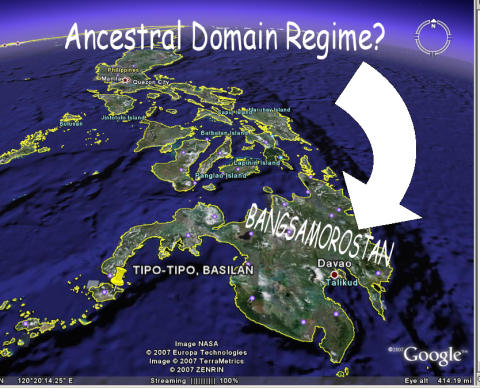
How should the prospective Philippine States be defined, created and proposed? We could take the recently controversial Memorandum of Agreement on Ancestral Domain (MOA AD) defining the Bangsamoro Juridical Entity as a model. To form Eleven States there must be at least eleven plebiscites in which all the persons affected by the establishment of all those eleven new juridical entities must have a chance to ratify or reject the same. In other words, democratic plebiscites must approve of the massive gerrymandering of provinces, cities, municipalities and barangays that has to be undertaken just to create the future constituent States of the envisioned Federal Republic of the Philippines.

Before the Federal Republic can be created, established and ratified by the constituting or federating States, those very States must first be created, established and ratified by the people who will become residents and voters in those States. By parity of reasoning, ALL of the people in the Eleven States enumerated by JR 10 ought to be given the opportunity to decide in plebiscites if THEY want to be part of one or another of this set of Eleven States.

The Palace and Congress have used the concept of requiring popular plebiscites to ratify such rearrangements as the establishment of the Autonomous Region of Muslim Mindanao, and even in the controverted Memorandum of Agreement on Ancestral Domain (MOA-AD) where barangay-level plebiscites are being propoed to "expand" the territory of the ARMM (though under MILF stewardship and management!)

But it would seem to be a requirement of equitable treatment that if the Bangsamoro Juridical Entity (BJE) can only be formed after a plebiscite, so too with the other "States." For example, the people in the presently existing provinces whether their people will allow their province to become a part of a proposed "State" of the future federal republic.

I think these and other very basic and simple considerations represent insuperble stumbling blocks for the Federalists...at least those who are in a hurry. The trajectory," (as Press Secretary Jess Dureza is fond of putting it nowadays) involves the Congress convening itself into a Constituent Assembly and crafting a new Federal Constitution of the United States of the Philippines before the Constitutional Clock runs out on Gloria Macapagal Arroyo in May 2010. As I've shown above, I think, there have to be not one but two SETS of PLEBISCITES, those to create the States, and then those to authorize the Union. These processes cannot be combined and made simultaneous, for it would be absurd to suggest that the same plebiscite creating a given State can also decide if that State will join a federation all of whose prospective members are themselves not yet in existence!

Given less than two years to go before the May, 2010 elections, the prospects Fast-tracked Federalism are dim and problematical.

Tuesday, August 12, 2008

The Other Shoe Comes Off

Well, well, well the other shoe now comes off as President Gloria Macapagal Arroyo calls for chacha on federalism. Everything is coming clear on why the palace was willing to sign off on anything with the MILF in that silly MOA-AD

For me, the real tip-off was the oh-so-coy remarks of MILF spokesman Eid Kabbalu saying they knew nothing of these chacha moves. The way I listen to him is usually to assume that he is lying and means exactly the opposite of what comes out of his mealy mouth and waiting to see if events prove the assumption right. (Works 99% of the time!)

So the truth that comes out in the wash is that the MILF saw this chacha gambit of the Palace and they played hardball with that soft-skull Dureza and the clueless Esperon to get everything they ever wanted and more as the deadline towards the SoNA approached.

The President's desperation to extend her term is now showing like a whore's stained slip as the Supreme Court received a major challenge to look at the MOA's Constitutionality from motions to intervene from former Senate President Frank Drilon and Opposition Senator Mar Roxas.

Even the role of US Ambassador Kristie Kenney and apparent US acquiescence to some kind of deal with the MILF can now be understood in this light. My theory is that the Palace was able to convince the naive Ms. Kenney (though not necessarily the State Dept. or the White House, which aren't exactly paying any attention to the Philippines right now because of other more pressing events) that President Arroyo will be able to get the chacha choochoo going. The constant repetition by Jess Dureza of the argument that any MOA has to pass Constitutional muster and popular plebiscites anyway, suggests to me that this was also the argument they presented to Ambassador Kenney. She may have been swayed by such an argument, given her time here is limited anyway by the US President election, but Condi Rice and the Americans may have bad hair day when they have a better look at the MOA-AD, whose final form and substance were only finalized in the run-up to the SONA. By then, not even the fantabulist ideas of Pastor Boy Saycon, Butch Valdez and Billy Esposo about a "Muslim client state in exchange for a US base in Bangsamorostan in preparation for a final showdown war with China" -- will seem very funny. Considering how the relative calm in Mindanao has been shattered by the unravelling of the GRP-MILF peace talks and all-out war looming with an emboldened MILF raising the flag of independence in its base camps (according to Cotabato Vice-Gov. Manny Pinol), the US will surely be reviewing its understanding of things.

With PCGG Chairman and Arroyo water-carrier Camilo Sabio's role in trying to influence his brother Jose on the GSIS-Meralco case coming to light, the Supreme Court's independence, not just the CA's, is really on the dock now.

Monday, January 21, 2008

Bernas Would Create Afghanistan in Mindanao Using Chacha

Founding Father Joaquin Bernas, SJ, writes in PDI today about how simple it would be for the Congress to enact Surgical Constitutional Change as a means of achieving peace and solving the Mindanao problem. (Yeah, right!) Never mind that it involves surgically creating a Frankenstein Unitary Federal Republic...
From what I have seen of the conflict in Mindanao and of the efforts to achieve permanent peace in the region, I have become convinced that lasting peace cannot be achieved without some significant changes in the structure of government in Mindanao... In my view, the search for a solution to the Mindanao problem can be approached through this “surgical” method. More specifically the goal can be either a reformulation of the powers that can be given to the Autonomous Region or the formation of a federated state for Mindanao. I believe that a limited constitutional change can be achieved by Congress under the present constitutional provision without disturbing the rest.
If carried out, the Congress could end up establishing a kind of Afghanistan in Mindanao. Call it the Federated State of Bangsamorostan, a kind of State-within-a-State, a single "federated" Islamic theocracy surgically carved out of the unitary Philippine Repubic. But we are assured by the good Father Bernas that such an entity can be achieved "without disturbing the rest."

Hashim Salamat, Eid Kabbalu, Nur Misuari, and the rest of the Dr. Jekylls and Mr. Hydes in Mindanao's liberation front industry must be sharpening up their surgical axes already, while the folks that did Bali are eagerly looking forward to their new Base and Homeland in Mindanao, courtesy of the Philippine Congress and Father Bernas.

See you at Plebiscite time, Father!

Thursday, January 10, 2008